

University of Victoria | Department of Gender Studies
| Research Areas: Cultural Studies; Environmental Humanities; Political Ecology and Environmental Justice; Black and Indigenous Feminist Ecological Thought; Stories, Metaphor; Critical Canadian Studies |
Dr. Anita Girvan is an associate professor of environmental and epistemic justice in the department of Gender Studies at the University of Victoria in Lək̓ʷəŋən and W̱SÁNEĆ lands. Following familial routes and roots, and marginalized lineages of socio-ecological governance, her scholarship traces Black feminist/Afro-Caribbean eco-cultural knowledges as they encounter knowledges of other communities grappling with the aftereffects of colonization. They are informed and inspired by coalitional and collaborative approaches to world-building, including through music, poetry and other cultural productions.
Girvan has published articles in Atlantis, the Journal of Canadian Studies, Contingencies, Studies in Social Justice, Feminist Studies, Journal of Political Ecology, CTheory, and Rhizomes, and has published the book Carbon Footprints as Cultural-Ecological Metaphorsin the Environmental Humanities Series with Routledge. She is currently collaborating with Devi Mucina and his Chewa communities in Malawi, Africa on a SSHRC-funded project affirming Gule Wamkulu Indigenous mask dance as a structure of governance. She is also collaborating with Nisha Nath, Davina Bhandar and Rita Dhamoon through the Insurgent/Resurgent Knowledges lab at www.IRKlab.ca.
For this “Racialized Ecologies” project, Girvan is exploring: 1) racialized railway ecologies in Canada; and 2) cassava as a diasporic agent from Latin American and the Caribbean to and across Africa-and back again.
Selected Publications
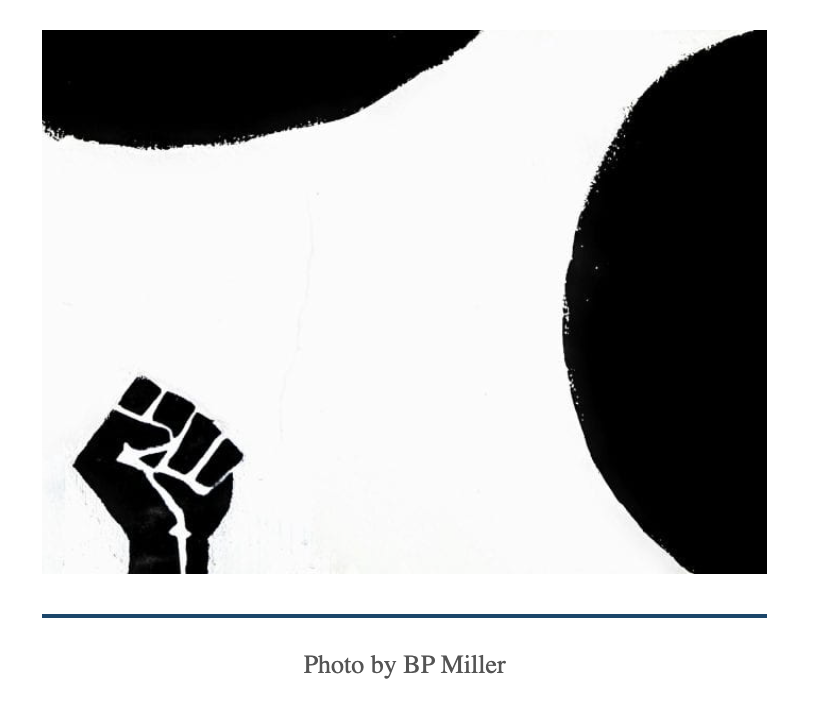
Girvan, Anita. Pedagogies of Black Feminist and Coalitional Ecological Praxis. Contingencies: A Journal of Global Pedagogy, volume 3, number 1, 2025, pp. 1-35.
Girvan chronicles an emergent journey of learning, through initiating a Black feminist & coalitional ecological thought reading salon in a university, and through other place-based learning and teaching practices in Syilx Okanagan territory (known as Kelowna, British Columbia, Canada). Building upon and extending Black feminist orientations, reckoning with both eco-social joy and suffering/injustice in equal measure, these pedagogies address complexities of (de)colonization, racial hierarchies of knowledge, and coalition with non-humans in ways that go beyond surface level identity politics.
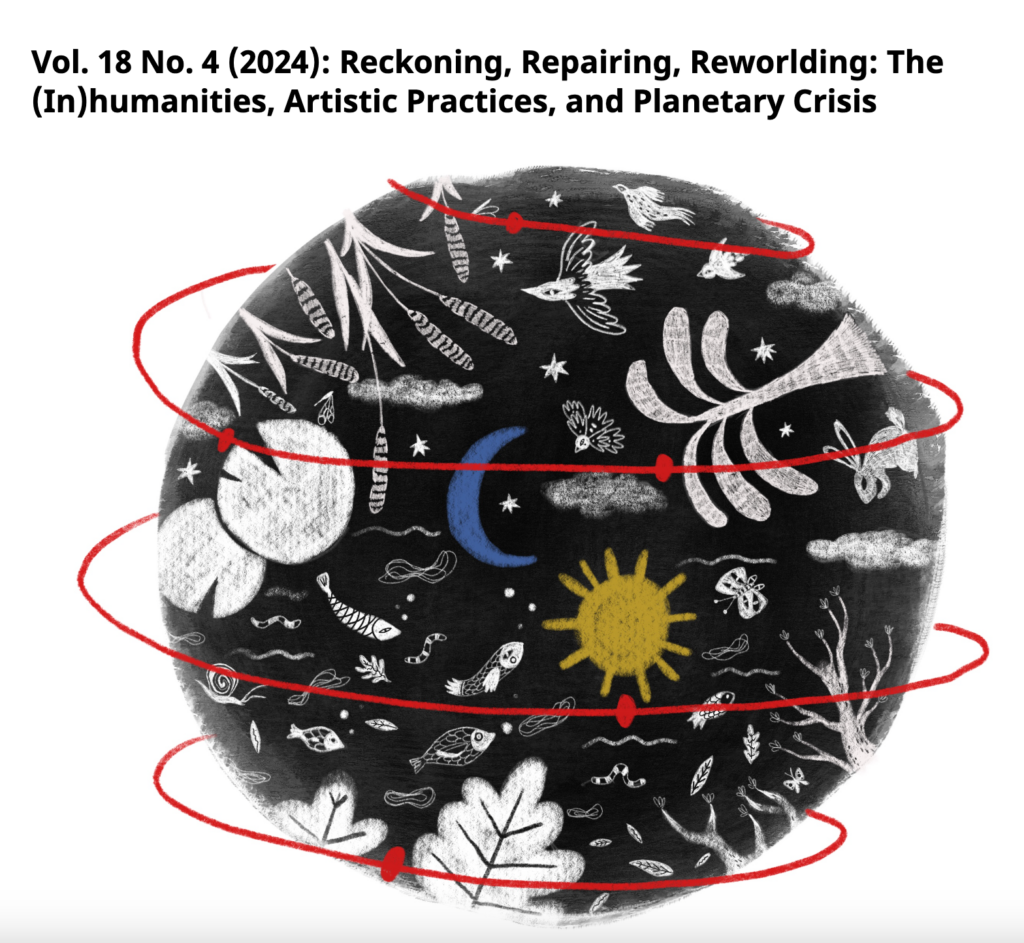
Girvan, Anita & Astrid Pérez Piñán. Ecologies of De/colonization: Embodied Caribbean Diasporic Perspectives. Studies in Social Justice, vol. 18, no. 4, 2024, pp. 781-804.
Girvan and Piñán explore the capacity of creative practice, imaginative co-creation, and humanities enquiry to contribute to decolonial reckoning as a step toward feminist, anti-racist, anti-oppressive, and multilingual repair and reworlding. What follows includes contributions from those broadly working under the umbrella of the humanities, but who nevertheless live in tension with the subject position to which it conventionally aspires and through which it traditionally administers and gatekeeps knowledge. The three terms guiding their enquiry – namely reckoning, repairing, reworlding – are motivated by a decolonial ethics animating alternative pathways for living, dying, being, caring, and feeling otherwise amid a planetary crisis centuries in the making.
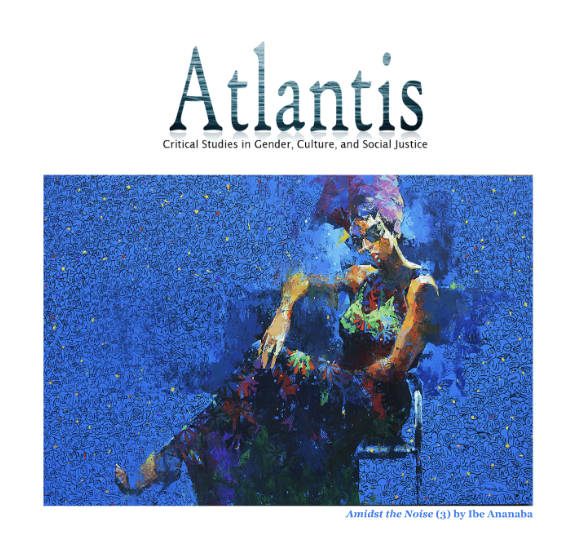
Girvan, Anita., Maya Seshia, Nisha Nath, and Davina Bhandar. “Poetic Fabulations: Chartering Relationalities of Black Flourishing, Mutuality, Inclusive Excellence, and Accountability.” Atlantis: Critical Studies in Gender, Culture and Social Justice., vol. 45, no. 1, 2024, pp. 25–38.
This collective work (four authors) demonstrates how persistent structures in higher education are mobilized in the signing of the Scarborough Charter on Anti-Black Racism and Black Inclusion in Canadian Higher Education: Principles, Actions, and Accountabilities. The authors read this event against the grain, as an act requiring relation-building and accountability. Recognizing the promises and risks of this work, and inspired by Black Feminist/coalitional practices which disorient from pre-mapped routes and knowledges in universities and reorient to otherwise ways of being, we name this process “poetic fabulation.”
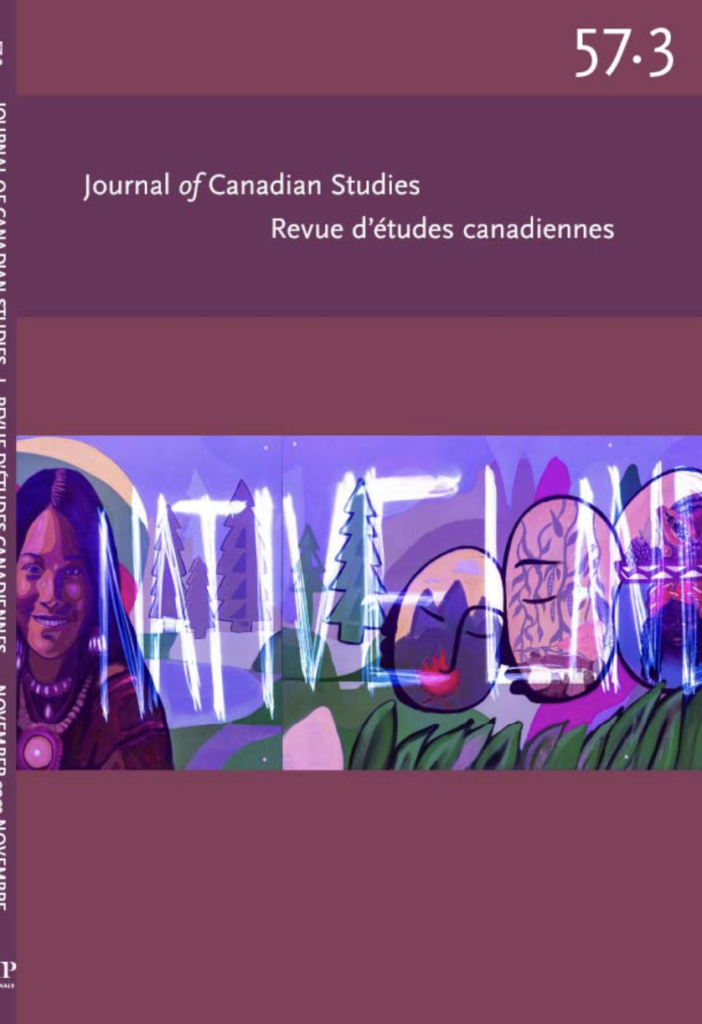
Girvan, Anita, Priscilla McGreer, and Makayla LeSann. “Tracing E-race-sures, Finding Reclamations: Embodied Perspectives in ‘Canadian’ Immersion.” Journal of Canadian Studies, vol. 57, no. 3, Nov. 2023, pp. 339–64.
At this critical time of reckoning with histories and present legacies in Canada, the authors come together as an emergent collaborative research team to reflect on how education and wider systems in this country have shaped their individual and collective experiences. As we affirm our practice of visiting and sharing histories from embodied perspectives and commitments in order to build relations, we find echoes in the concepts and practices of Métis and Black/African-Caribbean diasporic communities that we are in relation to. The notion of e-race-sures helps them name the gaps that our communities have experienced in the cultural imaginaries and literal making of Canada where racialized notions of belonging have enabled colonization and entitled (largely white) settlement. Beyond remediating these gaps, the notion of reclamations allows them to move past deficiencies and affirm what has always been there.
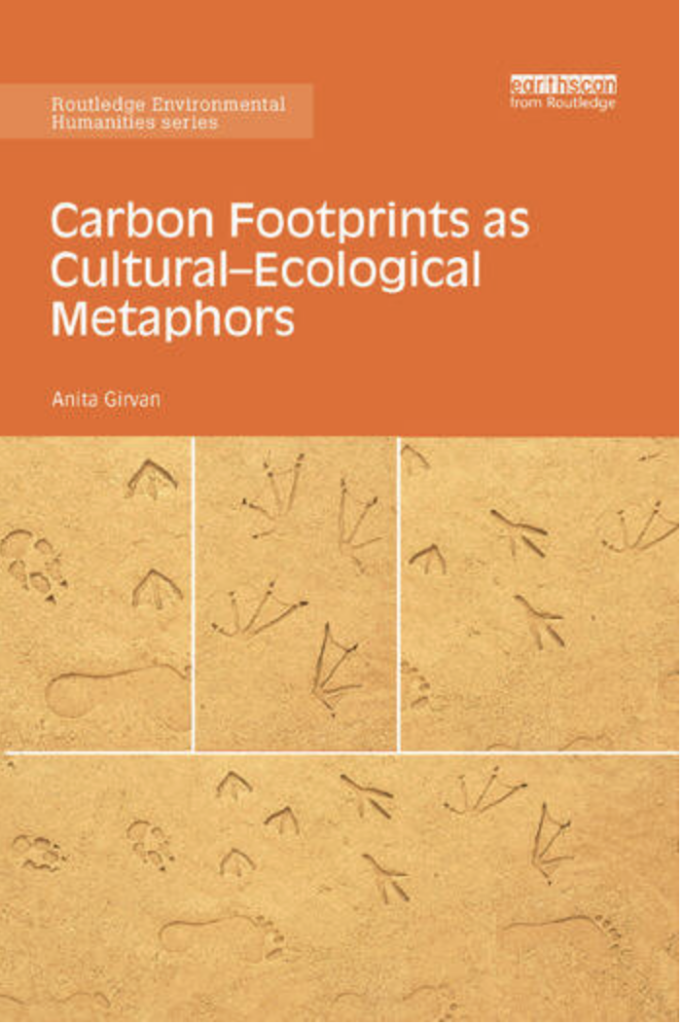
Girvan, Anita. Carbon Footprints as Cultural-Ecological Metaphors. Exon, UK: Routledge. 2018.
Through an examination of carbon footprint metaphors, this books demonstrates the ways in which climate change and other ecological issues are culturally and materially constituted through metaphor. The carbon footprint metaphor has achieved a ubiquitous presence in Anglo-North American public contexts since the turn of the millennium, yet this metaphor remains under-examined as a crucial mediator of political responses to the urgent crisis of climate change. Existing books and articles on the carbon footprint typically treat this metaphor as a quantifying metric, with little attention to the shifting mediations and practices of the carbon footprint as a metaphor. This gap echoes a wider gap in understanding metaphors as key figures in mediating more-than-human relations at a time when such relations profoundly matter. As a timely intervention, this book addresses this gap by using insights from environmental humanities and political ecology to discuss carbon footprint metaphors in popular and public texts.